
Shockwave therapy · Shoulder pain
Shoulder pain reaching overhead? Treat the tendon, then rebuild it.
Focused shockwave therapy for chronic shoulder pain in Orchard Park — combined with hands-on care and progressive strength work so you can lift, throw, swing and sleep on that side again.
Why it lingers
A shoulder that hurts for months usually has a tendon that stopped healing.
The rotator cuff and biceps tendons work hard in every reach, lift and throw. Once they've been irritated for a while — or calcium deposits have formed in the tendon — pain at night and with overhead reaching can hang on long after the original strain.
Shockwave therapy sends focused acoustic pressure waves into that tissue to increase local circulation and stimulate the body's own repair response. Calcific rotator cuff tendinitis is one of the most studied uses of the treatment.
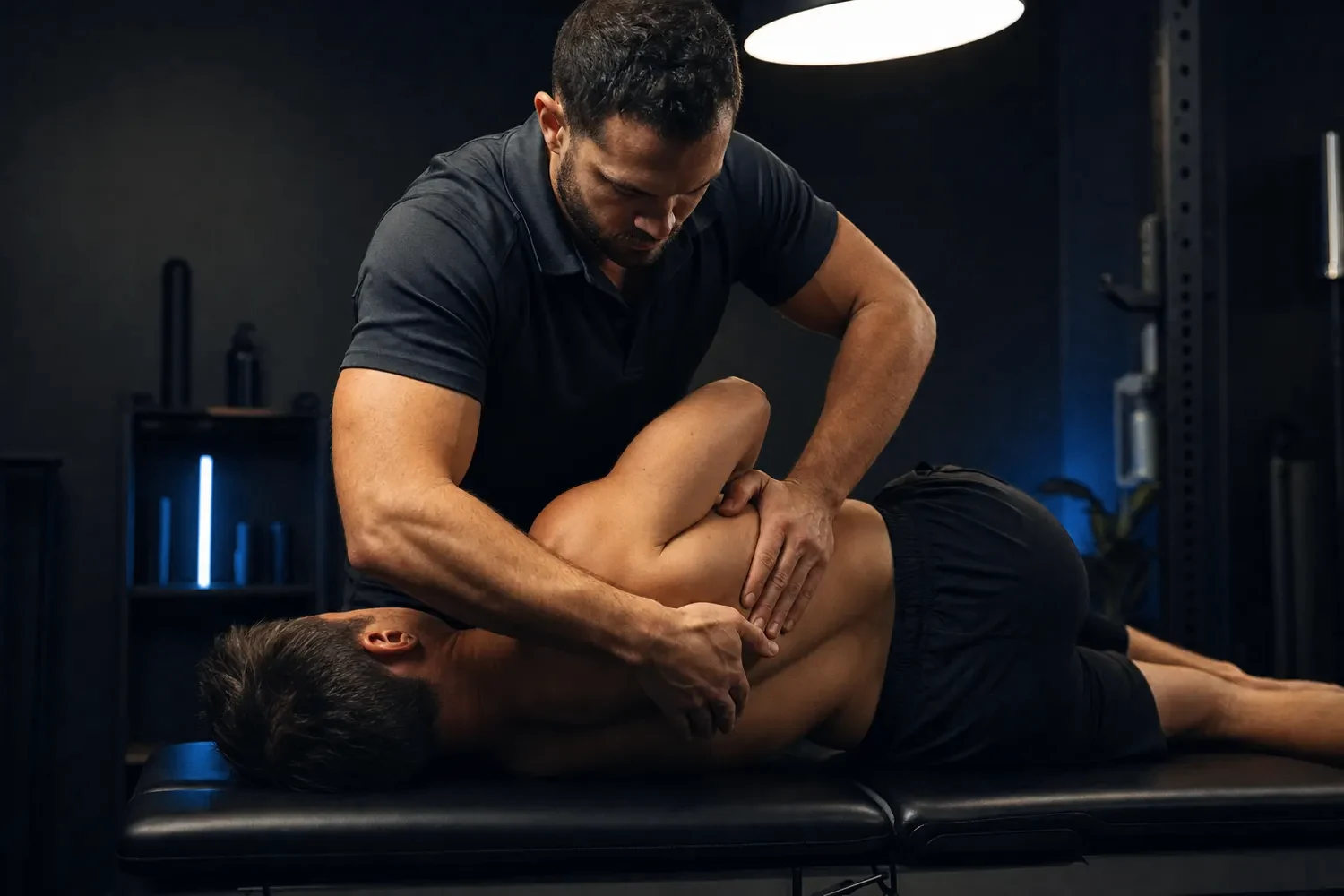
Then we rebuild the shoulder. Treatment is followed by targeted rotator cuff and shoulder-blade strength work, so the improvement holds when you get back to the gym, the course or the job site.
Candidacy
Shoulder problems shockwave therapy tends to help
It's most useful for shoulder pain that has lasted more than six weeks and hasn't responded to rest, stretching or a home exercise sheet. We'll confirm the source during your evaluation before recommending it.
Often a good fit
- Rotator cuff tendinopathy and tendon pain
- Calcific tendinitis (calcium deposits in the rotator cuff)
- Pain reaching overhead or behind your back
- Night pain lying on the affected shoulder
- Biceps tendon pain at the front of the shoulder
- Stiff, painful shoulders, as part of a mobility plan
- Throwing, swimming, golf, tennis and pickleball shoulders
- Lifting-related shoulder pain that returns with pressing
We'll talk it through first
Shockwave therapy isn't appropriate for everyone. We screen for it during your evaluation and will tell you if it isn't the right tool. Situations that need a closer look — or a different plan — include:
- Pregnancy
- Blood-clotting disorders or blood-thinning medication
- Active infection, open wound or tumor in the treatment area
- Recent cortisone injection at the site
- Pacemakers or implanted devices near the target area
- Acute fractures or unhealed bone injury
- Suspected full-thickness rotator cuff tear or recent dislocation (we refer for imaging first)
The visit
What a shoulder visit looks like
01
Find the real source
A full hour on your first visit: history, range-of-motion and strength testing, and a neck screen, since neck problems often refer pain into the shoulder. We rule out tears or anything that needs imaging or referral.
02
Treat, 6–10 minutes
If you're a candidate, we set depth and intensity for the tendon involved and treat. You'll feel firm tapping and pressure; we adjust in real time. No anesthetic needed.
03
Load it, then leave
We follow straight away with rotator cuff and shoulder-blade strength work, and send you home with a short plan. No sling, no downtime, no time off.
3–6 sessions
A typical course, usually spaced about a week apart and built into your rehab visits.
Non-invasive
No needles, no injections, no medication, no incisions and no recovery period.
Depth set per structure
The applicator's focal depth is adjusted to the shoulder tissue being treated, not one fixed setting.
Stay active
You keep moving. We modify load rather than shut you down — that's part of why it works.
Individual results vary and shockwave therapy is not a guaranteed outcome. Suitability, session count and expectations are set during your clinical evaluation — never over the phone or from a website.
The Axis difference
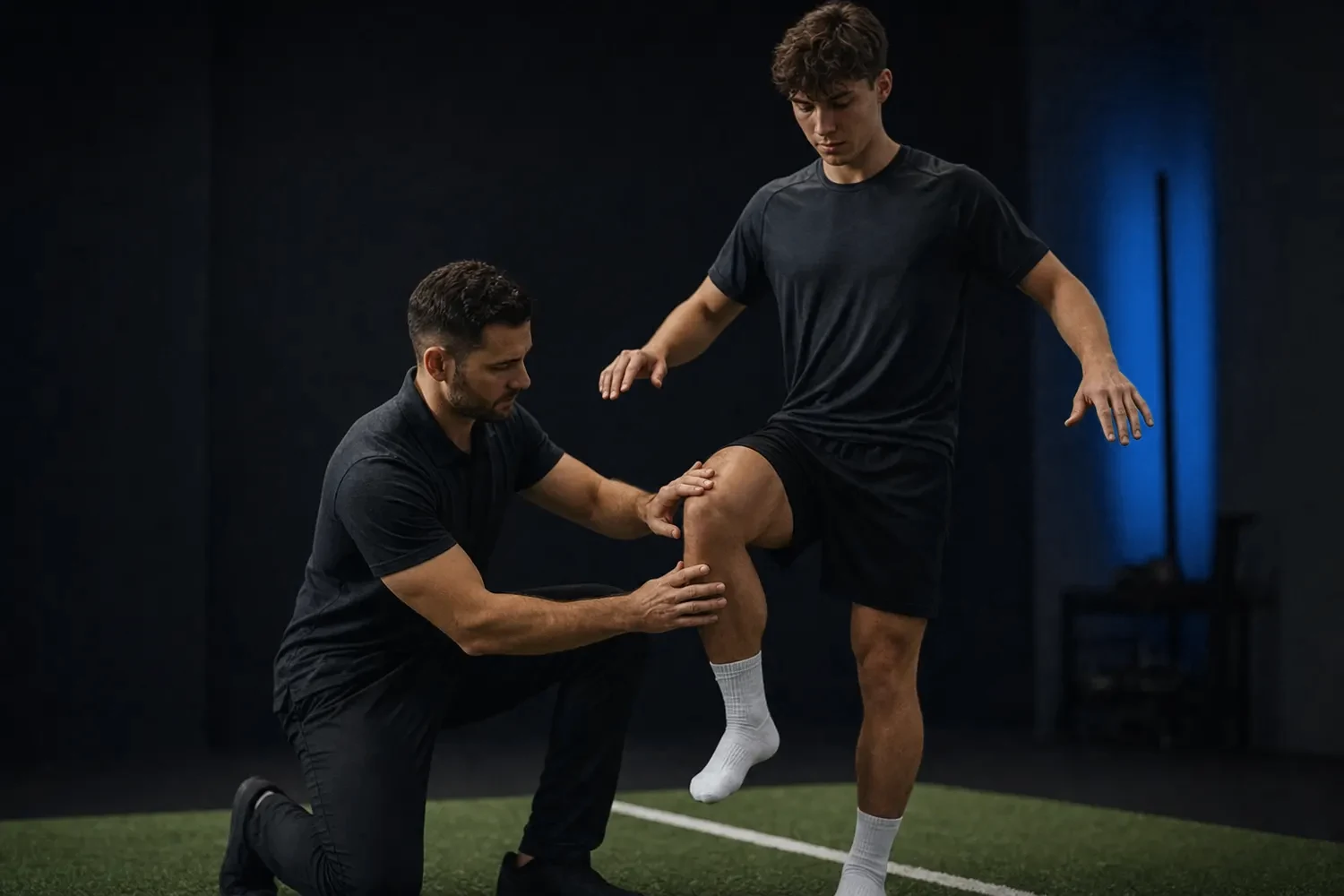
Same doctor. Treatment table and strength rack in one room.
Every visit is one-on-one with Dr. Nicholas Rozborski, D.C. Because the rehab space is in the same studio, shockwave treatment and the strength work that makes it last happen in the same session — not across two appointments at two clinics.
FAQ
Questions about shockwave therapy for shoulder pain
Does shockwave therapy work for shoulder pain?
Shockwave therapy has the strongest research support for calcific rotator cuff tendinitis and is also used for chronic rotator cuff and biceps tendon pain. Results vary from person to person. At Axis it is always combined with progressive strengthening, and we confirm you are a candidate during your evaluation.
Can shockwave therapy fix a rotator cuff tear?
No. Shockwave therapy is used for tendon pain and tendinopathy, not to repair a torn tendon. If your exam suggests a significant tear, we will refer you for imaging and an orthopedic opinion.
Does shockwave therapy for the shoulder hurt?
Most people describe firm tapping and pressure that is intense but tolerable. We start at a low setting and adjust in real time. No anesthetic is needed and there is no downtime.
How many sessions will my shoulder need?
A typical course is 3 to 6 sessions, usually about a week apart and built into your rehab visits. Your exact plan is set after your evaluation.
Is shockwave therapy an alternative to a cortisone shot?
For many people with chronic shoulder tendon pain, it is a non-invasive option to try before or instead of an injection. If you have had a recent cortisone injection in the shoulder, we will usually wait before treating that area.
Do I need a referral or an MRI?
No referral is needed to see a chiropractor in New York. Most people do not need imaging before their first visit; if your exam suggests a tear or another problem, we will tell you.
Dealing with knee pain too? See shockwave therapy for knee pain.
Reach, lift and sleep without the shoulder deciding for you.
Book an evaluation and we'll tell you whether shockwave therapy is the right tool for your shoulder — or whether something else is.